
NewsDetails
Dropper Bottles for Serums and Oils: Glass versus Plastic and Pipette Design
author:Hongxing time:2026-10-20 14:32:38 Click:0
Abstract
Dropper bottles are specified for products where the dose must be small, repeatable and delivered precisely: serums, facial oils, essential-oil blends and some pharmaceutical liquids. The pack combines a container, a closure that also acts as a metering device, and a pipette whose length and orifice determine the drop size. This article compares glass and plastic bodies, explains teat and pipette selection, and identifies the tests that reveal whether a dropper will dose consistently to the last millilitre.
Glass or Plastic
Glass offers chemical inertness, excellent barrier and a premium feel that suits high-value serums. It also brings weight, breakage risk in parcel networks and higher freight cost. Plastic bodies in PET or PETG provide clarity close to glass at a fraction of the weight and are far more resistant to handling damage, but they require compatibility testing for solvent-rich formulas and can transmit oxygen over long storage. For products with a shelf life beyond two years and actives sensitive to oxidation, glass with an amber or opaque finish remains the safer choice; for travel sizes and e-commerce-heavy ranges, plastic usually wins on total cost of ownership.
The Teat and Its Function
The rubber teat is the most failure-prone part of the assembly. It must seal against the glass or plastic pipette without leaking when inverted, deform predictably when squeezed, and recover its shape so that the next dose is repeatable. Natural rubber offers excellent elasticity but degrades with oils and has a distinctive odour that can migrate into fragrance-free formulas. Nitrile and silicone teats resist oils and solvents better and are preferred for essential-oil blends. Teat hardness, usually expressed on the Shore A scale, determines the force needed to draw product: a harder teat gives finer control, a softer one is easier for users with limited hand strength.
Pipette Length and Orifice
Pipette length must reach the bottom of the bottle without touching it, typically two to three millimetres short, so that the last portion of product can still be drawn. A pipette that is too short wastes product and frustrates the user; one that touches the base may draw air or trap sediment. The orifice at the tip determines drop size together with the product's viscosity and surface tension, and it must be specified against the product rather than the pipette alone. Graduation marks, when required, must be printed at positions that correspond to actual delivered volume, which requires a fill-and-weigh check rather than a geometric calculation.
Closure and Seal
The dropper closure performs two functions: it seals the bottle and it holds the pipette in a fixed position. A common design uses a threaded collar with a PTFE-faced liner or a conical plug that seats in the neck. Where the product is oil-based, the liner must be resistant to swelling; where it is aqueous, evaporation control becomes the priority. Tamper evidence is usually provided by a shrink band or a breakaway ring, and child resistance may be required for products containing certain actives.
Verification Checklist
- Measure delivered drop weight for the first, middle and last tenth of the fill.
- Invert the filled pack for 24 hours and check for leakage past the teat.
- Test teat recovery after 200 actuations.
- Check pipette tip clearance from the bottle base.
- Verify liner compatibility by storage with the actual formula at 40 °C.
- Run drop testing in the retail carton, not bare glass.
- Confirm graduation accuracy if marks are printed.
Filling, Capping and Line Speed
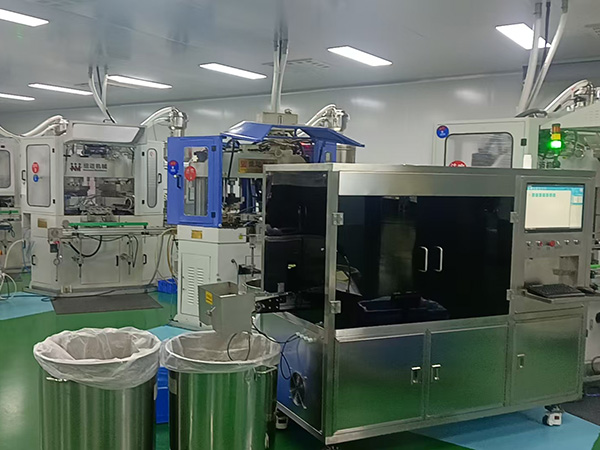
Dropper packs slow a filling line down. The bottle must be filled to a level that leaves room for the pipette without overflow, and the pipette must be inserted without splashing product onto the neck thread. High-speed lines often fill by weight rather than by volume, because the narrow neck makes level detection unreliable. Capping torque is another constraint: the dropper collar must be tight enough to seal but not so tight that the teat deforms or the pipette is pushed into the base of the bottle. Where a tamper-evident band is used, the shrink tunnel temperature must be controlled so that the teat is not heat-aged during the process, which would change its elasticity before the product even reaches the shelf.
Conclusion
Dropper performance is decided by the interaction of teat, pipette and bottle neck. Glass remains the reference for inertness and premium perception, while plastic offers weight and durability advantages. Whichever body is chosen, dose consistency across the fill life and leak-tightness when inverted are the two properties that determine whether the pack will be judged reliable.
References
- USP <671>, Containers — Performance Testing. United States Pharmacopeia.
- ISO 8362-1:2018, Injection containers and accessories — Glass tubing for the manufacture of vials.
- ISO 11040-4:2015, Prefilled syringes — Glass barrels for injectables.
- EU Regulation No 10/2011 on plastic materials and articles intended to come into contact with food.
- ASTM D4169-22, Standard Practice for Performance Testing of Shipping Containers and Systems.
- ISO 9001:2015, Quality management systems — Requirements.
 Recommended Products
 Contact us
—— Contact:Mr. Liu
—— Tel:+86 15630715521
—— Email:1324265984@qq.com
—— Url:https://www.hongxingpackaging.com
—— Address:Dusheng Town, Cang County, Cangzhou City, Hebei Province, China