
NewsDetails
Can You Print Our Logo on Bottles and Jars?
author:Hongxing time:2026-10-20 14:38:33 Click:0
The Short Answer
Yes, and there are five practical routes: silk screen printing, pad printing, hot stamping, pressure-sensitive labels and shrink sleeves. Which one fits depends on the container's shape, the number of colors, the required durability and the order quantity. Each method needs artwork prepared in a specific way, and each has its own setup cost per color or per die, which is why a two-color logo on a curved jar is quoted differently from a single-color logo on a flat cap.
Matching the Method to the Container
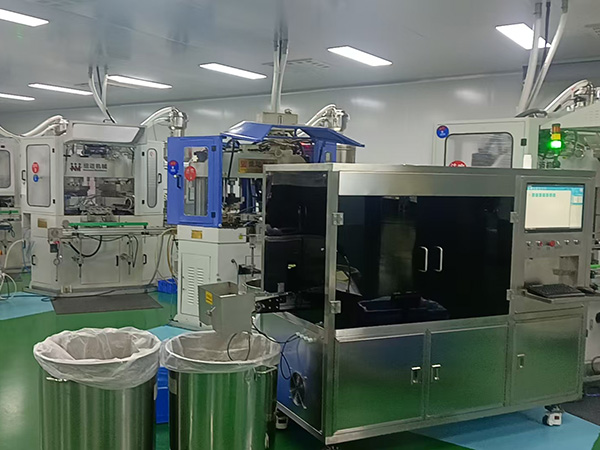
Silk screen suits cylindrical bodies and bold graphics, and it deposits enough ink to remain opaque on dark containers. Pad printing is the better choice for caps, small jars and any surface with steps or recesses, because the silicone pad conforms to the shape. Hot stamping produces a metallic or pigmented foil image with sharp edges and is usually reserved for logos and thin text rather than large areas. Labels deliver photographic print quality at low setup cost but are vulnerable at the edges on textured surfaces. Shrink sleeves cover the whole container and are the only practical way to achieve full-wrap graphics on an irregular shape.
Artwork Requirements
Vector artwork is essential. Raster images must be traced or redrawn, because a logo supplied only as a JPEG will either print with soft edges or require an artwork charge. Text should be converted to outlines so that fonts do not substitute on the supplier's system. The file should specify the color system using a recognized spot-color matching reference, with a note on the substrate, because the same reference appears different on white PP and on clear PET. For pad printing, line weights below roughly 0.15 mm and type smaller than about 4 points become unreliable and should be adjusted before plates are made.
Setup Costs and Minimums
Every color in silk screen and pad printing requires its own screen or plate, and every hot stamping design requires a metal die. These are one-time costs that follow the design, not the order, so they are paid once and reused for repeat orders as long as the artwork does not change. Minimum quantities per decoration run exist because the press must be set up and color-matched before production; a small order can still be printed, but the setup cost dominates the unit price. Where the quantity is small, a printed label applied to a stock container usually delivers the same visual result at a lower total cost.
Durability and Testing
- Confirm surface treatment for polypropylene, which needs flame or plasma treatment before printing.
- Request an abrasion test on a production sample, not a hand sample.
- Test adhesion after exposure to the product itself, since creams and oils attack some inks.
- Check resistance to alcohol-based sanitizers if the pack will be handled in clinical settings.
- Verify color against an approved master under two light sources.
- Inspect registration on multi-color work at the smallest text size used.
Choosing Between Direct Print and Label
The decision usually comes down to volume and design complexity. Direct printing has higher setup and lower unit cost, so it wins above a few thousand pieces and where the design uses few colors. Labels have near-zero setup and higher unit cost, so they win for small runs, frequent design changes and photographic imagery. A hybrid approach is often best: a stock container with a small direct-printed logo for a permanent brand mark, plus a label carrying product-specific copy and regulatory text that changes by SKU. This separates the fixed element from the variable one, so a text change does not require new screens or plates.
Branding Across a Product Family
Brands with several products benefit from a consistent decoration architecture. A single logo position and a single print technique across all jars make a family look deliberate on shelf, even when the containers themselves differ in size. It also reduces setup cost, because plates and screens are reused across SKUs. Where a new product is added later, keeping the same technique avoids a visible mismatch between the new pack and the existing range, which is a common problem when a first product used labels and a later one used direct printing.
Conclusion
Logo printing is routine, provided the artwork is vector, the method matches the geometry, and durability is tested with the actual product. Setup costs per color are unavoidable but are paid once. For small volumes, labels offer the same branding with lower entry cost; for large volumes, direct printing gives better durability and a cleaner look.
References
- ISO 2409:2020, Paints and varnishes — Cross-cut test.
- ASTM D3359-23, Standard Test Methods for Rating Adhesion by Tape Test.
- ASTM D5264-98(2019), Standard Practice for Abrasion Resistance of Printed Materials.
- ISO 105-A02:1993, Textiles — Tests for colour fastness — Grey scale for assessing change in colour.
- ISO 9001:2015, Quality management systems — Requirements.
- EU Directive 94/62/EC on packaging and packaging waste.
 Recommended Products
 Contact us
—— Contact:Mr. Liu
—— Tel:+86 15630715521
—— Email:1324265984@qq.com
—— Url:https://www.hongxingpackaging.com
—— Address:Dusheng Town, Cang County, Cangzhou City, Hebei Province, China