
NewsDetails
How Should Jars and Bottles Be Cleaned Before Filling?
author:Hongxing time:2026-10-20 14:44:35 Click:0
The Short Answer
Most cosmetic containers supplied in sealed polybags from a controlled molding environment do not need washing, and washing them can introduce more contamination than it removes unless the process is validated. Pharmaceutical and some regulated cosmetic applications do require a defined cleaning step, often with filtered air or purified water, followed by drying and verification. The decision should be based on the product's microbiological risk, the market's requirements and the supplier's cleanliness specification - not on habit.
What the Supplier Controls
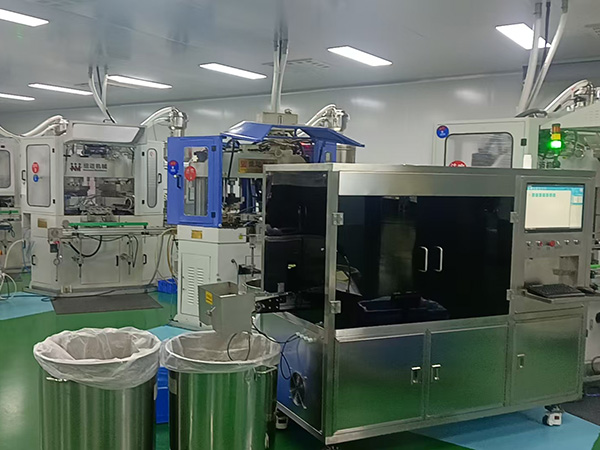
Injection molding is a hot process, so freshly molded parts are effectively sterile until they are handled. The contamination risk therefore comes from handling, packing and storage rather than from the molding itself. A supplier who packs immediately after molding, in a controlled area, with operators wearing gloves, delivers parts with a low bioburden. Asking how parts are handled after ejection, whether they are bagged in line, and whether the packing area is separated from the molding floor tells you more about cleanliness than a general assurance.
When Cleaning Is Necessary
Cleaning is justified where the part has been stored for a long period in a dusty environment, where it has been transported without protection, where the product is preservative-free, or where the market requires a validated washing step. It is also necessary where molding aids or release agents have been used, since these can transfer to the product. For a standard cosmetic jar with a preserved emulsion, cleaning is usually unnecessary and adds a drying step that must itself be validated, because residual moisture in a jar is a microbial risk that did not previously exist.
Cleaning Methods
Compressed air with a filtration level appropriate to the application removes dust and loose particles without wetting the part. Aqueous washing with purified water and a suitable detergent is more thorough but requires rinsing, drying and verification of residue. Solvent wiping is used for specific soils but introduces compatibility and residue questions. Whatever method is chosen, the parameters - pressure, temperature, contact time, water quality - must be fixed and recorded, because a cleaning step that varies between runs cannot be validated.
Verification
Verification is what separates cleaning from the appearance of cleaning. Visual inspection under controlled lighting catches visible particles. Rinse-water analysis measures residue. Microbiological testing on swabs or rinse water quantifies bioburden. For most cosmetic applications, a documented visual inspection with a defined lighting level and a particle limit is proportionate; for pharmaceutical applications, the method and acceptance criteria should come from the product's quality requirements. Whichever is used, the records should be retained so that a later investigation has a baseline.
Practical Sequence
- Define the cleanliness requirement from the product's risk assessment.
- Ask the supplier how parts are handled and packed after molding.
- Keep parts in sealed bags until the filling area.
- If air cleaning is used, specify filtration and pressure.
- If washing is used, validate rinse water quality and drying.
- Verify with a documented inspection under defined lighting.
- Record cleaning parameters for each run.
- Store cleaned parts in covered containers, not open trays.
Microbiological Considerations in Brief
Bioburden on a molded part is normally low, but it is not zero, and the product's preservation system is designed to handle a defined load. A cleaning step that reduces bioburden can allow a lighter preservative system, which is one reason some brands choose to wash. The counter-argument is that a wet process introduces water, and water in a closed container is a growth medium unless drying is complete and verified. Where the product is preserved and the container is bagged in line, doing nothing is often the lower-risk option, provided the bag remains sealed until filling.
Whatever is decided, it should be written down and applied consistently. A cleaning step that is performed sometimes, by some operators, with unspecified parameters is worse than no step at all, because it creates a false sense of control without providing any assurance. Consistency, not thoroughness, is what makes a cleaning process meaningful.
Conclusion
Cleaning should be a decision rather than a default. Containers molded and packed under controlled conditions are usually clean enough for preserved cosmetic products, while regulated products may need a validated step. Defining the requirement first, then choosing a method and verifying it, avoids both unnecessary wet processes and unjustified assumptions of cleanliness.
References
- ISO 14644-1:2015, Cleanrooms and associated controlled environments — Classification of air cleanliness.
- ISO 9001:2015, Quality management systems — Requirements.
- 21 CFR 211.94, Drug product containers and closures. U.S. Food and Drug Administration.
- USP <1116>, Microbiological Control and Monitoring of Aseptic Processing Environments.
- Regulation (EC) No 1223/2009 on cosmetic products, product safety requirements.
- ISO 11737-1:2018, Sterilization of health care products — Microbiological methods.
 Recommended Products
 Contact us
—— Contact:Mr. Liu
—— Tel:+86 15630715521
—— Email:1324265984@qq.com
—— Url:https://www.hongxingpackaging.com
—— Address:Dusheng Town, Cang County, Cangzhou City, Hebei Province, China