
NewsDetails
Tamper-Evident Features: Shrink Bands, Breakaway Rings and Sealed Cartons
author:Hongxing time:2026-10-20 14:34:07 Click:0
Abstract
Tamper evidence does not prevent access; it makes unauthorised access visible. For cosmetic and pharmaceutical packs, the feature must survive distribution without activating accidentally, must be obvious to the consumer when intact, and must break in a way that cannot be restored convincingly. This article compares the main options, explains how each is applied, and lists the failure modes that generate the most consumer complaints.
Shrink Bands
A shrink band is a sleeve of oriented film applied over the cap and neck and contracted with heat. It provides a full-circumference seal, works with almost any closure shape, and can carry printing or a perforation tab. Application requires a sleeving machine and a heat tunnel, and the tunnel temperature must be tuned to the film: too cool and the band wrinkles, too hot and it distorts or bonds to the cap. The most common field failure is a band that splits at the perforation during transport, which reads to the consumer as tampering. Band thickness and perforation depth must therefore be validated with vibration and drop testing rather than on a static sample.
Breakaway Rings
A breakaway ring is molded as part of the closure and connected by thin bridges. On first opening the bridges fracture and the ring drops onto the neck, leaving a visible gap between ring and cap. This is the most cost-effective option because it adds no separate component and no application step, but it only works when the closure design allows it. Bridges must be strong enough to survive capping torque and weak enough to break cleanly at the first opening; the window is narrow, and it narrows further as the resin ages. Where the product requires a hermetic seal, the ring alone is not sufficient and must be combined with an induction seal.
Induction Seals as Tamper Evidence
A foil induction seal bonded to the neck provides tamper evidence at the product interface rather than at the closure. It is arguably the strongest signal, because the foil cannot be reapplied once removed. It also delivers a barrier function, which makes it efficient where both properties are required. The trade-off is that it needs an induction sealer on the line and a consumer willing to peel a membrane, which some product categories resist. Where the foil is used, the label should tell the consumer that a sealed neck is expected, otherwise the absence of a seal is not noticed.
Carton and Label Features
Secondary packaging offers additional options: a glued carton flap that tears on opening, a security label that leaves a residue pattern when removed, or a printed seal across the lid. These complement primary tamper evidence and are often the only practical solution for packs with unusual shapes. Their weakness is that they protect the carton, not the product, so a determined tamper can remove and replace the primary pack. For that reason they are best used together with a primary feature rather than alone.
Failure Modes to Design Out
- Band splitting at the perforation during vibration.
- Bridges that fail during capping because torque exceeds design value.
- Rings that do not detach, leaving the consumer unable to open the pack.
- Adhesive residue patterns that look like tampering on an untouched pack.
- Induction foil that bonds only partially because the neck land is not flat.
- Shrink film that bonds to the cap and tears the print when opened.
Application Line Setup and Quality Control
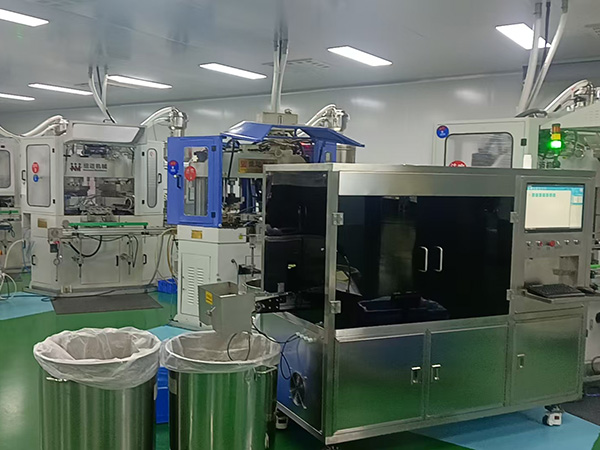
Shrink band performance is decided on the line, not in the specification. Three parameters must be set together: sleeve length, tunnel temperature profile and conveyor speed. A band cut too short will not overlap the cap shoulder and leaves a gap that looks like tampering; a band cut too long wrinkles at the base and can trap product. Temperature must be profiled across the tunnel rather than set as a single value, because the band passes through zones with different heat transfer. At start-up, the first twenty packs should be inspected for wrinkle, distortion and perforation integrity, and the check repeated at each reel change. Recording the parameters per batch allows a later complaint to be traced to a specific run, which is the difference between a speculative argument and a factual one.
Conclusion
Tamper evidence is a communication system: it must be intact when the pack is intact and unmistakably broken when it has been opened. Match the feature to the closure design and the filling line, validate it after transport simulation, and instruct the consumer what to expect. The cheapest option is the one that never activates by accident.
References
- ISO 11607-1:2019, Packaging for terminally sterilized medical devices — Requirements for materials, sterile barrier systems.
- ASTM F1929-15, Standard Test Method for Detecting Seal Leaks in Porous Medical Packaging by Dye Penetration.
- ASTM D4169-22, Standard Practice for Performance Testing of Shipping Containers and Systems.
- 21 CFR 211.132, Tamper-evident packaging requirements for over-the-counter drug products.
- ISO 8317:2015, Child-resistant packaging — Requirements and testing procedures.
- EU Regulation No 10/2011 on plastic materials and articles intended to come into contact with food.
 Recommended Products
 Contact us
—— Contact:Mr. Liu
—— Tel:+86 15630715521
—— Email:1324265984@qq.com
—— Url:https://www.hongxingpackaging.com
—— Address:Dusheng Town, Cang County, Cangzhou City, Hebei Province, China