
NewsDetails
Injection Molding versus Blow Molding: Process Selection for Plastic Bottles
author:Hongxing time:2026-10-20 14:37:04 Click:0
Abstract
Plastic bottles reach the market through three main processes: injection molding, extrusion blow molding and injection stretch blow molding. Each produces a different combination of dimensional precision, weight distribution, optical quality and tooling cost. This article explains how the processes differ, what each does best, and how the choice affects design freedom and unit economics.
How the Three Processes Differ
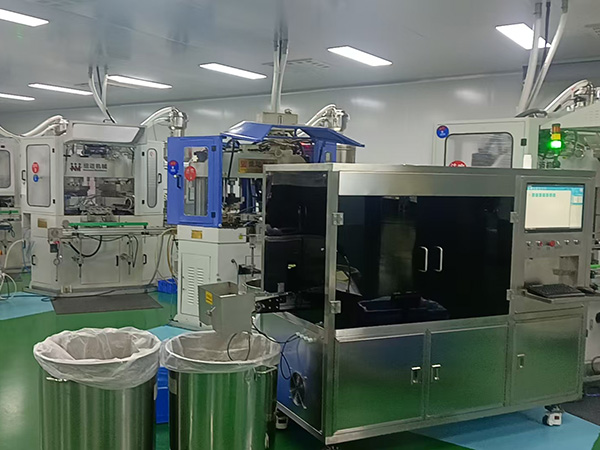
Injection molding fills a closed cavity under high pressure, producing parts with precise dimensions and excellent surface detail. It suits jars, caps, closures, droppers and wide-mouth containers, and it can hold tolerances of a few hundredths of a millimeter. Extrusion blow molding extrudes a molten tube, closes it in a mold and inflates it against the cavity walls; wall thickness is controlled by parison programming rather than by the tool alone, and tolerances are looser. Injection stretch blow molding molds a precise preform first, then stretches and blows it into the final bottle, aligning polymer molecules and producing a strong, clear, lightweight bottle.
Dimensional Precision and Thread Quality
Threads molded by injection have the tightest tolerances, which is why caps and closures are almost always injection molded. Blow-molded necks are cut or calibrated after molding, and their dimensions vary more, which is usually acceptable because the closure has a flexible sealing element. Where a bottle must accept a precision pump or dropper with a tight plug seal, injection molding or a calibrated blow-molded neck is preferred. Neck ovality in blow molding is the most common source of leakage complaints.
Weight Distribution and Strength
Blow molding allows material to be distributed where it is needed: thicker at the base, thinner in the body, thicker at the shoulder. This is an advantage for large bottles where uniform walls would be wasteful. Injection molding produces essentially uniform wall sections dictated by the core, which is efficient for small containers but less so for tall bottles. Stretch blow molding improves strength by biaxial orientation, letting a bottle achieve the same top-load and drop performance with less resin.
Tooling Cost and Minimum Volumes
Injection molds are the most expensive per cavity and take longer to build, which raises the minimum order quantity that makes economic sense. Extrusion blow molds are cheaper to cut, so lower volumes are viable, but cycle times are longer. Stretch blow molding requires both a preform mold and a blow mold, so total tooling cost is highest, and it becomes economical at higher volumes or where the weight saving pays back the investment. For a new brand with modest volume, an existing injection mold or a standard blow-molded bottle is usually the faster route.
Optical Quality
Injection-molded PS and PET parts offer the highest clarity because both surfaces are formed against polished steel. Extrusion blow molding produces a seam and generally lower transparency. Stretch blow molding gives excellent clarity in PET, comparable to glass for many cosmetic applications, which is why clear shampoo and lotion bottles are commonly produced this way.
Design Freedom
- Injection: fine detail, sharp edges, integrated threads, precise inserts.
- Extrusion blow: complex handles, large volumes, irregular shapes.
- Stretch blow: elegant profiles with lightweight walls and good clarity.
- All three: decoration by printing, labeling or sleeving.
Choosing Between Them
Start from the closure. If the pack needs a precision pump, a child-resistant closure or a tight plug seal, injection molding gives the most reliable neck. Then consider volume: below a few tens of thousands of units, tooling cost dominates and standard molds are preferable. Then consider weight and clarity targets, which favour stretch blow molding for clear bottles and extrusion blow molding for large opaque ones. Finally, confirm that the chosen process can deliver the wall thickness needed to survive the intended transport route.
Maintenance, Cycle Time and Supply Stability
Process choice also affects how a supply relationship behaves over time. Injection molds need scheduled maintenance roughly every few hundred thousand shots, and a worn core shows up first as thread damage or flashing at the parting line. Blow molds wear more slowly but depend on parison control that drifts with screw and heater condition, so wall distribution can change gradually without any visible defect until weight checks reveal it. Stretch blow molding depends on preform quality, and a preform lot with inconsistent acetaldehyde levels will show as haze or taste issues in the finished bottle. Buyers evaluating a supplier should ask which process runs the part and what the routine maintenance interval is, because the answer predicts how stable the packaging will look in the third year of a supply agreement.
Conclusion
Process selection is a trade among precision, weight, clarity and tooling investment. Injection molding wins on precision, extrusion blow molding on low-volume flexibility, and stretch blow molding on clarity and strength-to-weight.
References
- ISO 294-4:2018, Plastics — Injection moulding of test specimens, determination of moulding shrinkage.
- ISO 1183-1:2019, Plastics — Methods for determining the density of non-cellular plastics.
- ASTM D638-22, Standard Test Method for Tensile Properties of Plastics.
- ASTM D4169-22, Standard Practice for Performance Testing of Shipping Containers and Systems.
- ISO 9001:2015, Quality management systems — Requirements.
- 21 CFR 211.94, Drug product containers and closures. U.S. Food and Drug Administration.
 Recommended Products


 Contact us
—— Contact:Mr. Liu
—— Tel:+86 15630715521
—— Email:1324265984@qq.com
—— Url:https://www.hongxingpackaging.com
—— Address:Dusheng Town, Cang County, Cangzhou City, Hebei Province, China